Thursday, 18 February 2016

Former President Nasheed of the Maldives thanks Fiona Bruce MP

Former President Nasheed of the Maldives thanks Fiona Bruce MP

Former President Nasheed of the Maldives requested a meeting with Fiona Bruce MP in Parliament to thank her for her championing his cause after he was imprisoned following a coup by a rebel group in the Maldives.

Following representations made by Fiona Bruce MP as Chair of the Conservative Party Human Rights Commission (appointed by David Cameron) and other MPs, former President Nasheed has been released from prison for medical treatment in London, although with the commitment he will return.

In the meantime, MPs, including Fiona, continue to press the UK Government to impose targeted sanctions on the Maldives until former President Nasheed’s position is regularised and he is, hopefully, returned to power.

Speaking in the House of Commons recently, the Prime Minister stated in response to a request for targeted sanctions:

“It was an honour to meet former President Nasheed, who I think did an excellent job for his country in cutting out corruption and turning that important country round. He suffered terribly from being in prison, and it is good that he is able to get out to seek medical treatment, but we want to see a change in behaviour from the Maldivian Government to make sure that political prisoners are set free. Yes, we are prepared to consider targeted action against individuals if further progress is not made. Let us hope that the diplomatic efforts, including by the Commonwealth action group, will lead to the changes we want to see. Britain and its allies, including Sri Lanka and India, are watching the situation very closely.”


Mohamed Nasheed said: 
"While I was sitting in jail in the Maldives, one of the things that gave me hope was that there were organisations on the outside working tirelessly to secure my release. One of those was the Conservative Party's Human Rights Commission. I cannot thank them enough for their invaluable help in securing my release, and for giving succour to countless other Maldivian human rights defenders."  

Tuesday, 16 February 2016

Yemen


Yemen: A Nation of Children the Hashtags Forgot
Posted: 14/02/2016 20:18 GMT Updated: 14/02/2016 20:59 GMT
Yemen has been decimated by a yearlong, bitter, ongoing civil war. Despite its proximity to many better known Middle Eastern countries (it shares a long border with Saudi Arabia) it fails to gain the same level of international recognition that the fighting in Syria and Iraq have attracted. A lack of profile sadly does not mean a lack of problems and as the war trundles on, attempts to distribute aid are severely hampered by fighting, damaged ports, closed airports, blocked humanitarian corridors and a country-wide lack of fuel. The figures speak for themselves and behind every one of these statistics is a human tragedy:

·         21.2million people are in need of humanitarian assistance - including 9.9million children - making Yemen the country with the highest number of people in humanitarian need in the world right now
·         14.4million citizens are food insecure and the country is close to famine, and 7.6m facing severe food shortages, 1.3m children are suffering acute malnutrition
·         Over 5,700 people have been killed since March, including more than 630 children
·         3.4million children are out of school - this will have a long-term impact not only on their futures, but also the development of the whole country.
·         40% of the population are under 15, a whole generation of children vulnerable both to war and to forces who would seek to radicalise them. Hundreds of youths are joining extremist organisations out of desperation just to feed their families

2016-02-12-1455293507-7422917-RS108816_Rajaa2.jpg
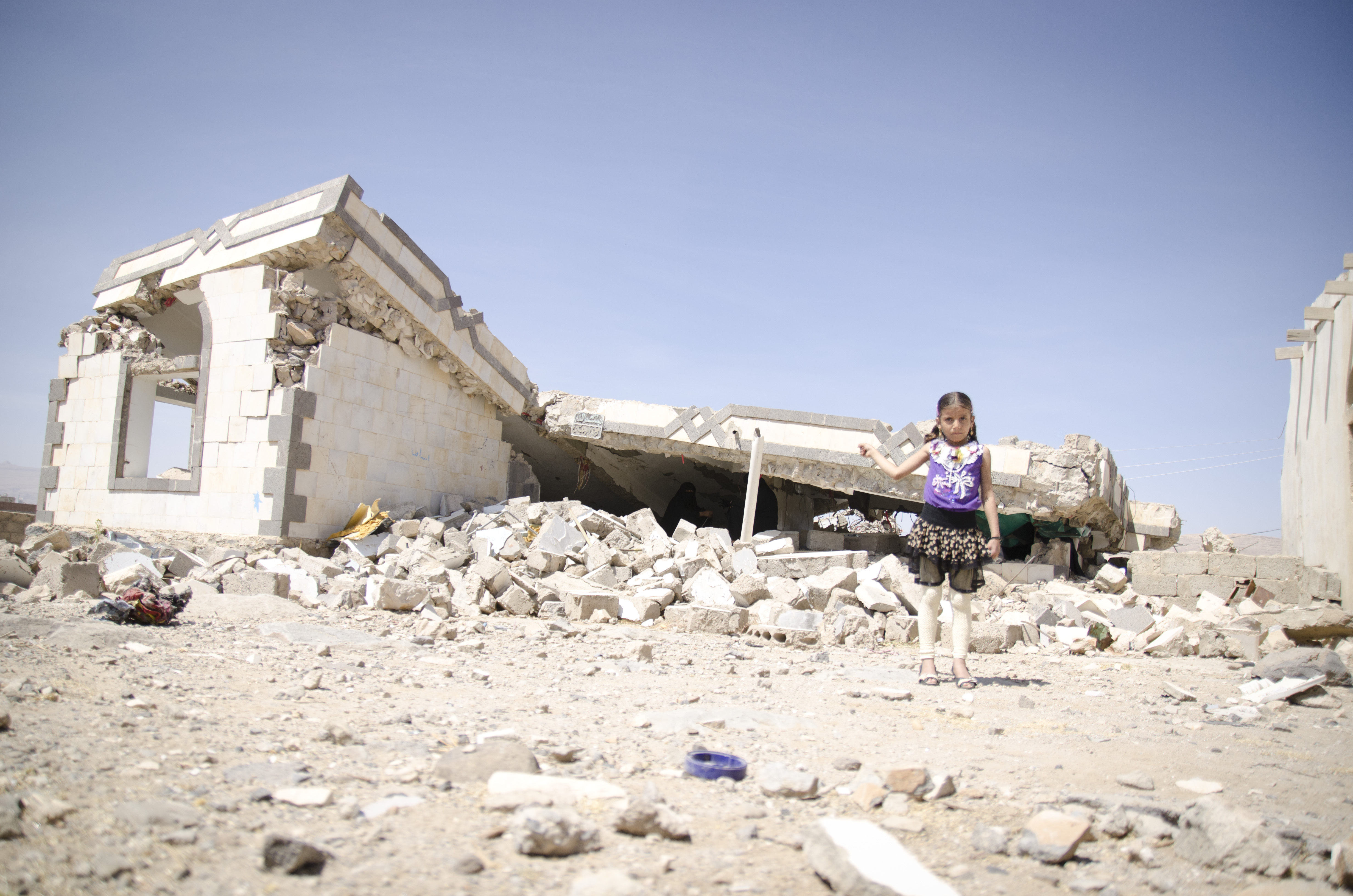
Rajaa* 7, was playing in the garden when a missile hit her house. Her mother, sister and brother died. (Photo: Muhammad Awadh/Save the Children)

It is no exaggeration to say that the situation is one of the worst on the planet. The United Nations and the NGO Action on Armed Conflict concluded that in the first seven months of 2015 more civilians died and were injured by explosive weapons than in any other country in the world. One area of particular vulnerability is the city of Taiz. As troops fight for control of the city, 300,000 internally displaced people are living under a "virtual state of siege" according to Stephen O'Brien, the UN Under-Secretary-General for Humanitarian Affairs and Emergency Relief. Their health system is crippled; medical supplies are rarely available except at hugely inflated prices on the black market. There is a chronic lack of safe water and sanitation. Some humanitarian access to the city's desperate inhabitants is possible, but severely restricted.

To add to the misery, economic activity is grinding to a halt: I have heard evidence from those with family still living in Yemen that over 70% of private businesses have closed down or been physically destroyed by the conflict and a similar percentage of private sector workers have lost their jobs. Banks have been shutting down. One man told me that before the war, businesses like his had a choice of 15 different banks; now he only has one, and even that is at risk of closing shortly. This highlights the need for Aid in the short term, but ultimately a political solution is essential to revitalise the economy to provide food and livelihoods for the Yemeni population on a sustainable basis.

2016-02-12-1455293176-2907695-RS104933_Hazim_10yearsoldYemen4.jpg
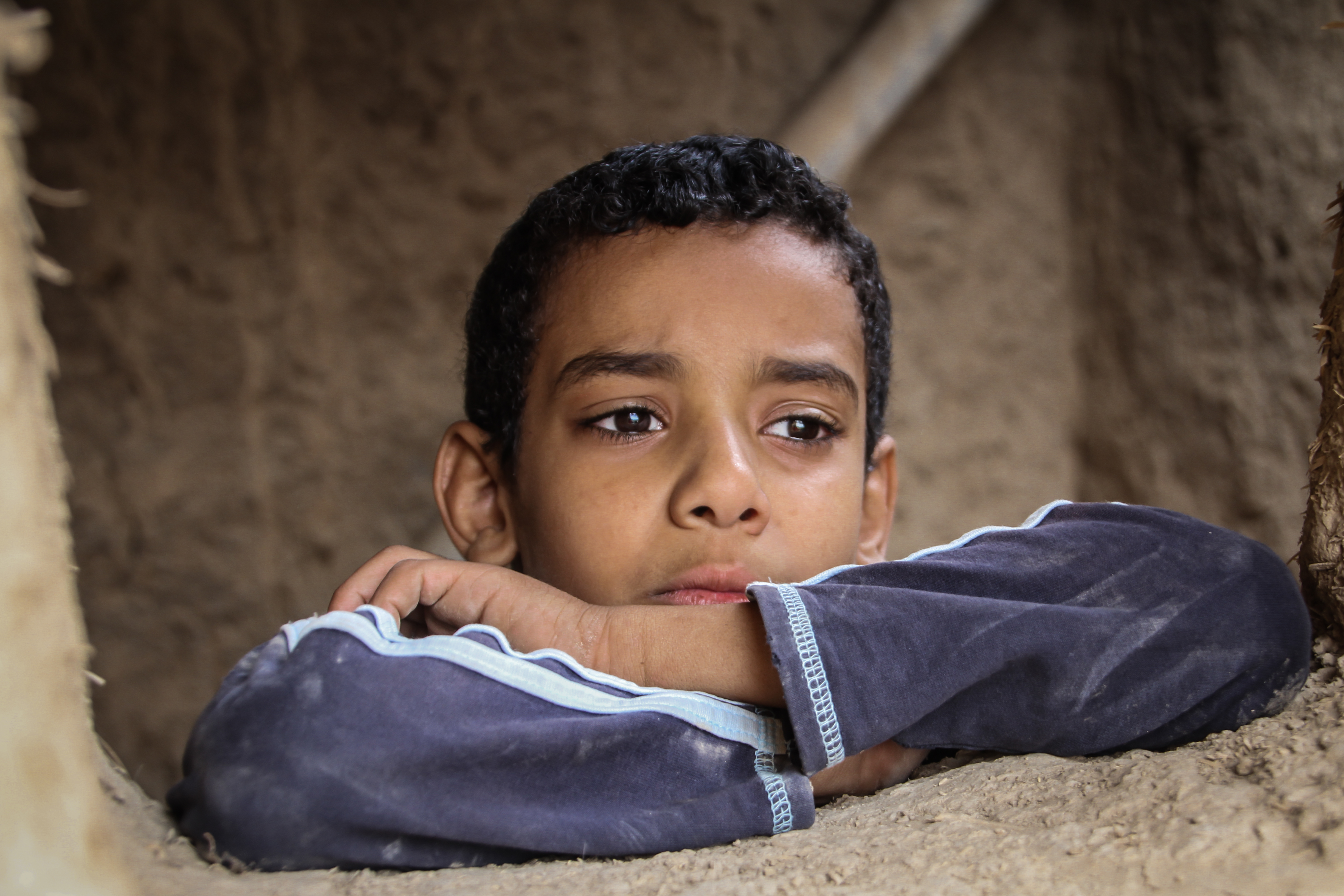
Hazim* 10, is displaced with his family from Sa'ada where it was too dangerous to remain (Photo: Mark Kaye/Save the Children)

I have the privilege of sitting on the International Development Select Committee, which monitors how UK Aid is spent. We have recently launched an inquiry into the crisis in Yemen and hearing of the heartrending suffering of the people there has led me to appeal directly to you, the reader, on behalf of the young girls and boys of Yemen. Unlike many of today's other much troubled areas of the world, which we see on our screens daily, much of the world's mainstream and social media seem to be passing by those suffering in Yemen.

If this article has moved you to have a heart for the children of Yemen, spread the message by emailing this article to a friend, or sharing it on social media. If you would like to give financially you can donate to Save the Children's Yemen appeal; their life-saving programmes have reached more than 379,000 people since March, including more than 211,800 children. Finally if you have first-hand evidence on Yemen, please make a written submission to the International Development Committee, you can do so here.


Fiona Bruce is MP for Congleton and Chairman of the Conservative Human Rights Commission

Thursday, 14 January 2016

Update on the APPG on Religious Education's administration


As Chair of the All-Party Parliamentary Group on Religious Education (APPG on RE), I thank the Religious Education Council (RE Council) for the support they brought as Secretariat of the Group in the last Parliament. Their administrative support contributed towards the Group to holding engaging and informative meetings.

As I stated to the RE Council representatives who I met on 6th January, the APPG on RE wishes to maintain a positive working relationship with the Religious Education Council in this Parliament, as well as with the many other RE groups in the RE community. It is very important for the APPG on RE to maintain and be seen to maintain independence in its engagement with the whole religious education community, including working with the widest possible range of stakeholders and experts. This should enable all those with an interest in this topic to maintain a constructive working relationship whilst being seen to be fully independent. This was the position that came out of the APPG’s AGM on 1st July 2015, when I was appointed as Chair, having served as Vice-Chair in the last Parliament, and when no external secretariat to the Group was appointed. Following that AGM, there has been ongoing contact over the past few months with RE Council representatives in planning the initial programme of the APPG for this Parliament. The administrative secretariat role in the early months of this Parliament has been carried out by staff in my office, and at my meeting on 6th January 2016 with RE Council representatives I confirmed that this situation would continue, and that the decision of the AGM at the start of this Parliament would therefore continue to be in effect going forward.

Religious education is a sensitive area of education policy, and it can be difficult to engage equally with all viewpoints. As Chair, I am keen to ensure that all stakeholders and perspectives feel that can engage with the group on an equal footing. This is an important time regarding policy on religious education, and it is important to ensure the contribution of the whole religious education community, and indeed the APPG has taken steps at the start of this Parliament to engage with a wide range of stakeholders, including the RE Council, and I hope this will continue.

I would also like to take this opportunity to clarify some slight misunderstandings regarding All-Party Parliamentary Groups, which I understand may have been circulated in response to my decision. There are specific guidelines that regulate these Groups, and it is entirely understandable for external organisations not to be fully aware of the details of these. However, as Chair of a number of different APPGs, I have a responsibility to ensure that they are adhered to. An All-Party Parliamentary Group is defined as ‘[consisting] of Members of Both Houses [MPs and Peers] who join together to pursue a particular topic or interest.’ These APPGs are established, led, and maintained by MPs and Peers, and it would therefore be a breach of Parliamentary protocol for an external organisation to ‘establish’ a Group, or to seek to ‘find’ a Chair for a group. The regulations are clear that if a new Chair for a Group is needed, then an AGM for the Group is held, having been advertised to all Members of the House of Commons and House of Lords, and then Parliamentarians attend the AGM and vote on the new Chair and other officers. It is therefore worth stating that if the REC, as suggested publically on 14th January 2016, had ‘established’ the APPG on RE or sought to ‘find’ a Chair, it would have been in breach of Parliamentary rules, and under Section 33 of the Parliamentary guidelines, the Parliamentary Registrar for APPGs could have removed the APPG on RE from the Register, effectively closing the Group down.

Following the 2015 election, the Chair of the APPG on RE, Stephen Lloyd, was not re-elected as an MP, and so, as Vice-Chair of the Group, I called an AGM for the Group on 1st July, and informed all Officers of the Group who served in the last Parliament, as well as all other MPs and Members of the House of Lords, in accordance with the strict Parliamentary requirements for publishing proper notice of such meetings. The AGM was accordingly held, a number of Parliamentarians attended, and new Officers were duly elected in accordance with prescribed procedures. My fellow Parliamentarians kindly voted me in as Chair of the Group. This meeting was held nearly two months after the election, by which time, I am not aware of any attempts by the Religious Education Council to approach me, as Vice-Chair, to help with these arrangements. Indeed, had this AGM not happened before the 7th July, the Parliamentary Registrar for APPGs would have dissolved the Group. In subsequent meetings with the Religious Education Council, it was apparent that they were not aware of this deadline. Again, it is entirely understandable for external organisations not to be aware of the details of Parliamentary regulation. APPGs are groups set up, led and run by Parliamentarians.

I would like to repeat my thanks for the work the Religious Education Council has done for the Group, and I express the hope that we will continue to work together in the future. They are rightly respected across the religious education community.

As the Group moves forward, we encourage all stakeholders to continue to engage with us on how religious education can be improved in this country, whether with regard to quality, availability or content. I am committed to ensuring that this Group plays a positive and proactive role in ensuring that religious education is prioritised by Government. Given many of the challenges and tensions we face as a society today, I believe that religious education has never been more important.

Tuesday, 12 January 2016

Fairer Funding


8th January 2016                                                                                       For Immediate Release

Congleton Team takes Fight for Fairer Funding to London
 
As part of her crusade to ensure equal funding for Congleton education, which saw her present a petition to Parliament in December, Fiona Bruce MP led a delegation of local education leaders to London on Tuesday 5th January to meet with the Minister for Childcare and Education, Sam Gyimah MP, to highlight the issues and seek assurance that the situation will soon be resolved.

The group included key representative of all stages of education within her constituency, from early years up to eighteen and comprised:
·         Fiona Bruce MP (Congleton)
·   Steve Hodgkinson (Leader of New Life Church - who provide nursery provision in Congleton – and representing Early Years providers)
·    Martin Casserley (Head of Black Firs Primary and Chair of Cheshire East Formula Working Group - who provide advice to the Cheshire East School Forum on local funding decisions - and representing Congleton primaries)
·      David Hermitt (Executive Principal of Congleton High, CEO of Congleton Multi-Academy Trust and Chair of Cheshire East School Forum)
·         Sarah Burns (Head of Sandbach School)
·         Ann Webb (Head of Eaton Bank Academy)
·         John Leigh (Head of Sandbach High and Sixth Form College)

Currently there is somewhat of a postcode lottery when it comes to education finance, with no current standard formula for calculating funding across the 151 local authorities. As a consequence, each authority receives a different amount based on historical factors that have resulted in it requiring more or less funding than another. Congleton, as part of Cheshire East, is located in the sixth most poorly funded authority in the country, receiving £200 less per student per year than its next-door neighbour, Cheshire West and Chester, who, itself is seventy fifth out of the 151. This £200 equates to a shortfall of over a £1,000,000 across five years, a significant amount that would make a major difference to the students and schools of our town.

Looking at the country as a whole, the disparity between the highest funded and lowest is immense. In 2015, the ten best supported areas were awarded grants averaging £6,300 per pupil, compared with an average of just £4,200 received by the poorest financed. This massive discrepancy of £2,100 represents a difference of over £2.5 million pounds of annual income for an average high school!

Ann Webb, Head of Eaton Bank Academy, spoke of her frustration with the situation, reflecting the sentiments of the group:
“We are a good school with outstanding features and wish to continue our success but have had to make some very bold staffing decisions moving forward with our budget. The unfairness of the current system makes this even harder”


Mr Gyimah has been charged with the responsibility of introducing a new national fairer funding process for education. The visiting group were able to provide the minister with the background to and concrete examples of the impact of this unfair distribution of finance in their particular schools. They posed questions about important issues such as regional differences and the response to national cost pressures such as increased national insurance and pensions.

Sarah Burns, Sandbach School Head, commented on this particular concern:
“The new formula needs to take account of the regional differences when dealing with changes in national insurance and pension contributions. Changes to employment on-costs are the same but the available funding to deal with this is not. Schools and Academies in better funded local authorities are able to absorb these costs more easily. Cheshire East Schools are already poorly funded per head and a typical school has now had to absorb an additional £73,000 of pension and national insurance costs per annum”

The impact of the lagged funding mechanism, by which the deficit is repaid in instalments over time, in causing cash-flow problems where student numbers are rapidly rising, was also highlighted. This has been a particular issue in Cheshire East, where the lack of a Local Plan for housing developments has impacted on educational provision, with the steep increase in new housing not reflected in funding of education.

Martin Casserley, Head of Black Firs, shared his school’s experience of this:
“At Black Firs Primary school, the local house building has resulted in increased demand for places. With no local guidelines or requirements as to providing financial support for education provision, housing developers are building next to popular oversubscribed schools without making any contribution to the infrastructure costs in Cheshire East.”

The role of the Local Authority, the Education Funding Agency and School forums was also discussed, as was the funding of early years education and the impact on nursery provision.

Steve Hodgkinson, Leader of the New  Life Church, voiced his optimism for the outcome of the meeting:
“ We are pleased that the issue of nursery funding has been clarified and reassurance given that pre-schools would have some flexibility about how they work in the future”

Throughout the meeting, the delegation received a favourable response from Mr Gyimah to the issues raised, confirming his awareness of the situation and understanding of their concerns. On conclusion of the session, the minster reassured the group that he would be introducing ways to provide “greater visibility” and ensure that local authorities act in a “consistent way in the new formula”.

David Hermitt, Executive Principal of Congleton High, summarised the feelings of the group following the meeting:

“We are pleased that the government has made the commitment to introduce this from 2017. We share Mr Gyimah’s desire to change the model to provide equitable funding across all the Local Authorities. Cheshire East is not asking for more than other authorities, just the same, fair amount of funding.”


Wednesday, 6 January 2016

M6 Smart Motorway

FIONA BRUCE MP SECURES ASSURANCE FROM ROADS MINISTER TO LOOK AGAIN AT IMPACT OF M6 WORKS


Fiona Bruce MP met with Roads Minister Andrew Jones MP in Parliament today to raise concerns from residents living near the M6, where the Smart Motorway Scheme is being implemented between junctions 16 and 19. This followed a question in the House of Commons by the Congleton Constituency MP (10th December 2015).

Fiona Bruce MP said today ‘The Roads Minister listened very carefully as I reinforced residents’ concerns that both noise levels and environmental impact on them are already causing serious disturbance and that this will undoubtedly only worsen both during these works and after they are completed, when there will be four lanes running in each direction, and greater traffic volumes. I asked him to look again at what can be done to address my constituents’ concerns.’

‘I am pleased that the Minister has agreed to look again at measures being taken to address the impact on my constituents’ daily lives of this major scheme, and look forward to hearing the outcome of the Minister’s review.’


Minister Andrew Jones MP said at the meeting: ‘We will go back to Highways England, and ask them to look at their plans again in light of the residents’ concerns regarding noise and environmental impact to see that proposed measures are robust. This is to include both the period of the works and running afterwards, when the scheme is complete.’

Friday, 18 December 2015

Foetal Alcohol Spectrum Disorder

Fiona Bruce MP speaks in Parliament on importance of early intervention and support for better outcomes for children

Fiona Bruce MP spoke yesterday in Parliament on the launch this week of an in-depth report from the All Party Parliamentary Group for Foetal Alcohol Spectrum Disorder (FASD) of which Fiona Bruce is Vice-Chair (http://www.fasdtrust.co.uk/) and urged Government to radically review its advice to expectant Mothers regarding alcohol intake during pregnancy and that the UK Government should be saying – as many other countries do, that “no alcohol is safest for baby and you” and that “without such a clear message, pregnant women in the UK are left confused and uncertain.”
Quoting from the report Fiona Bruce said
“this is astonishing and deeply worrying, and something which must be rectified as a matter of urgency.”
She added “The original clinical diagnosis of FASD was made in 1973. Our inquiry showed that in the four decades since then, the UK as a whole has still barely acknowledged its existence. That must change, and the Government must take a lead.”
Fiona’s contribution came during a debate on the 1001 Critical Days Manifesto Report launched in the last Parliament to which Fiona Bruce contributed and which was re-launched with additional support from new MPs this week in Parliament.
Fiona Bruce said “The importance of the first 1001 days in a child’s life, starting with conception, cannot be overstated. Identifying a baby’s needs as early as possible in a baby’s development can significantly improve the long term health and mental well-being outcomes. The benefits to both the baby and the parent are immense with society as a whole enriched if we can get a pre – Troubled Families Programme engaged into our mindset of how we do our public health and children’s social care across Government nationally and locally.”

END

Notes to Editor

1.    MPs from all parties have put their names in support of the 1001 Critical Days Manifesto (http://www.1001criticaldays.co.uk/) and are pressing ministers to adopt it as a Government policy across a number of departments.

The 1001 Critical Days Manifesto takes its title from the period from conception to age 2 when a baby’s brain is developing fastest and he or she is most susceptible to forming strong bonds of attachment with a primary carer, which will have a lasting impact and certainly set a child up for the best start in life, in school and into adulthood if we get it right.

The Manifesto highlights that many of the social problems seen in society today have resulted from poor parenting skills often as a result of a parent having had bad experiences as a baby and creating generational downward spiral. The goal is for every baby to receive sensitive, appropriate and responsive care from their main caregivers in the first years of life with more proactive help from the NHS, health visitors, children’s centres and other public bodies engaged in a joined – up preventative strategy to affect great change, as pregnancy and the birth of a baby is a critical window of opportunity. 

Friday, 20 November 2015

#1200 lights Foster Care Campaign

Fiona Bruce is supporting the CANW (Child Action North West) campaign to highlight the need for more foster carers in the North West saying "There is no more precious gift you can give a child than family."

On Friday 20th November at 8.30pm some of the North West’s best loved buildings will turn out their lights for one minute to raise awareness of the need for more foster carers in the region. 

The symbolic switch off is part of 1200 Lights, a campaign by Lancashire children’s charity CANW to highlight the fact that 1200 extra foster care families are needed in the North West this year alone – more than in any other region of the country. 

The Blackpool Tower, The Liver Building, the Tower of Blackburn Cathedral, the intu Trafford Centre and Lancashire County Cricket Club’s historic Pavilion at Emirates Old Trafford are just a few of the venues who’ll be taking part. 


(The video just explains a little more about 1200 Lights and its aim of encouraging more people to become foster carers, so of course, the more people who see it, the better!)